Moving Beyond the Delay Frame to Build Resilient Journalism (2026-2027)
Theme: Fairness of Climate Solutions
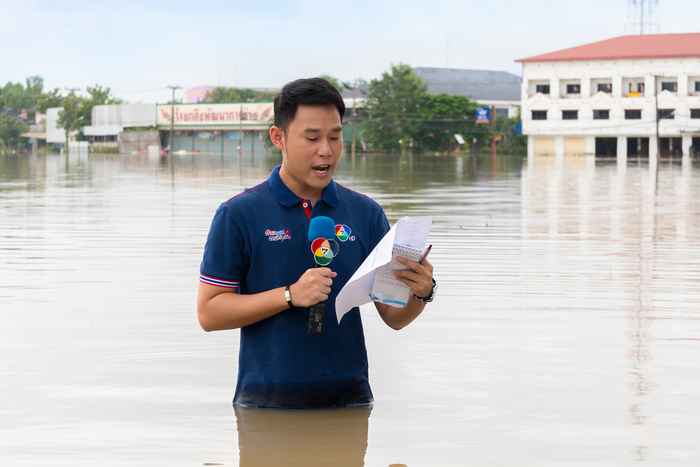
Journalism is also regarded as the ‘fourth estate’. It acts as a check on politics and other holders of power within the current economic system. Furthermore, the way in which the media reports on a subject has a strong influence on individual and collective behaviour. The media agenda shapes the public agenda and the world view of millions of readers, viewers and listeners, influencing the solutions they consider, and motivating politicians to adopt (climate) policies when they perceive broad public support.
The media are the guardians of reliable information and are becoming increasingly important now that disinformation is being spread more frequently via social media and AI. But they are also susceptible to disinformation themselves. The UN Human Rights Council Advisory Committee has demonstrated that disinformation systematically undermines climate action, and that actors with a financial interest in delaying action misuse the media to spread this information.
The nature of this undermining has changed over the years. Less time is now spent attacking climate science, and more on more subtle forms of delay – so-called ‘discourses of climate delay’: delaying narratives that justify inaction without denying climate science. The most effective, yet least recognisable, of these are economic delay frames. Concepts such as ‘competitive position’, ‘innovative capacity’ and ‘simplification’ appeal to everyone and feel like ‘common sense’ but are used as a shield to prioritise economic growth and profit-seeking over regulation and climate policy.
US research has shown that narratives about economic costs consistently dominate news coverage over frames relating to public health or climate impact. TNO confirms the same pattern in a small sample of newspaper articles in the Netherlands: coverage of changes in consumption is dominated by scare stories about the costs of climate policy, not about the costs of inaction. However, a systematic, comprehensive inventory of these narratives is lacking in the Dutch media.
Inoculation against disinformation now tested on journalists themselves for the first time
Recent developments in AI, and in particular large language models (LLMs), now make this inventory possible on a large scale. Furthermore, inoculation is a proven strategy for increasing resilience to disinformation; warning people in advance about potential fake news and the actors with a vested interest in it, as well as providing examples of misleading arguments, makes people less susceptible to deception. However, this inoculation has never been tested on journalists themselves.
In this project, the researchers therefore aim to develop a model to automatically detect delaying narratives in the media, and then, in collaboration with journalists, to develop a resilience toolkit, with the ultimate aim of measuring the impact of this intervention by conducting a further inventory of the delaying narratives.
-
Envisaged Impact
Immunising journalists against disinformation about the climate crisis, with a view to weakening the forces opposing the climate transition.
-
Researchers & partners
Fabian Dablander (SEVEN – Universiteit van Amsterdam / London School of Economics and Political Science), Lynn Vanheule (Bridgelab), Esther Remmelink (De Data Detective), Steef de Bruijn (Reformatorisch Dagblad), Louna Wemaere & Eva Morel (QuotaClimat).
-
Funding
Dutch Climate Research Initiative (KIN)
-
Opportunities for Collaboration
Do you see an opportunity for yourself or your organisation to collaborate on this theme? Please contact Denise Li.