Collaborating with: The Climate Expertise Center of the Amsterdam Sustainability Institute (VU)
SEVEN
6 July 2026
Together, we are building a network of researchers, policymakers, professionals, and social organisations working on concrete climate issues; we share our knowledge on transition thinking, transdisciplinary work, climate adaptation, and climate justice with that network, and we bundle existing and new knowledge to determine the research agenda.
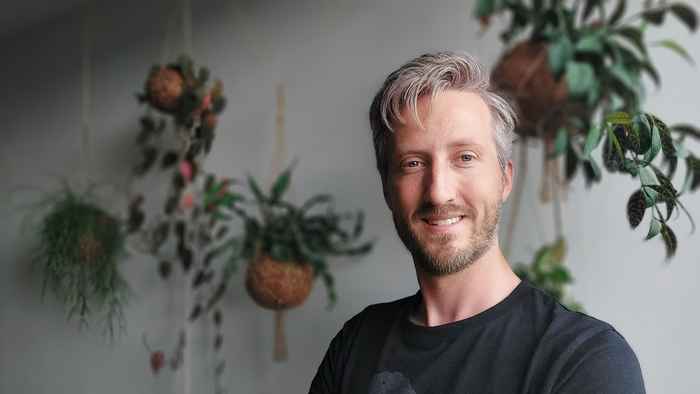
One of the collaborating partners is the Climate Expertise Centre of the Amsterdam Sustainability Institute (ASI) at VU. In this article, Toon Haer, managing director of the Climate Expertise Centre, shares his view on the importance of the collaboration.

Our ambition is to create science that is relevant, excellent, and impactful in the Netherlands, Europe, and beyond.Toon Haer, Managing Director Climate Expertise Centre
What is the core task of the Amsterdam Sustainability Institute?
By building strong and sustainable relationships, the ASI acts as a knowledge hub for new multi- and interdisciplinary research projects and helps secure and distribute funding. Our ambition is to create science that is relevant, excellent, and impactful, in the Netherlands, Europe, and beyond. Within the ASI, the Climate Expertise Centre specifically focuses on climate. It puts VU’s climate science in the spotlight to speed up the sustainability transition and contribute to a greener, fairer world. Our climate experts work in multi- and interdisciplinary research teams on all sorts of aspects of the climate crisis.
They not only look at how the climate system works and how changes affect the system, but also at what steps are needed to reach the 1.5-degree target of the Paris Climate Agreement and how we can use adaptation measures to reduce the impact of climate change. What’s special about the ASI is that it works on sustainability, social goals, and climate from many different perspectives and disciplines. Bringing this knowledge together leads to new, useful insights and understanding. Given the complex challenges we face in the MRA, the Netherlands and globally, this collaboration is crucial for finding solutions.
Which of ASI's research projects excite you?
The recently completed RESILIO project. And the TASICI project, which we just started. Within RESILIO, we worked together with other knowledge institutions in the city, the municipality, housing associations and commercial businesses on smart blue-green roofs. These roofs can be part of the sponge city, where water is stored during dry periods and can be buffered during heavy rainfall. In addition, the green layer provides opportunities for biodiversity and greenery. Plus it also looks fantastic. The collaboration within the project was exceptionally educational due to the diversity of partners. Everyone works towards the same goal, but with their own interests and considerations. Bringing this together and coming up with solutions together—that's where the challenge lies, but also the strength.
Our researchers are now starting up the TASICI project, where, within the MRA, work is being done on climate-resilient infrastructure. Here too, collaboration is central: between knowledge institutions, ProRail, Amsterdam Transport Region, Schiphol, Rijkswaterstaat, and Port of Rotterdam. Making the city's complex infrastructure climate-resilient is a huge challenge that can only be tackled together.
Why have you actively sought collaboration with the other knowledge institutions in Amsterdam?
Of course, there are already several collaborations in place, but the KIN hub brings all these partners together at the table for the first time. As parties, we recognise that we are facing urgent problems and that, by working together structurally, we can come up with solutions. Within the KIN Hub MRA and the Academic Workshop on Climate Adaptation, we can continuously strengthen each other, stay focused and work together on the challenges for the MRA. We can also share our knowledge more easily with our partners, making it findable and applicable in practice.
What do you hope to achieve through this collaboration?
One of the biggest goals, as far as I'm concerned, has already been reached: bringing the city's knowledge institutions together in an organised way to work with the municipality and the water board on knowledge challenges related to climate adaptation and mitigation. Hopefully, this will grow over the coming years into an ecosystem of partners working on solutions on this topic. In addition, I hope we can even better unlock the knowledge offered by institutions for societal partners, thereby supporting and accelerating the climate transition.
How do you envision a future-proof city?
To me, a future-proof city is green, biodiverse, climate-resilient, and fair. A place where we manage heat, water, and space smartly, and where everyone can benefit from a healthy living environment. In short: a city that is prepared for the future and remains a pleasant place to live for everyone.