Climate institute SEVEN publishes policy briefing to support groundbreaking climate conference in Colombia
The authors: “A fair fossil fuel phase-out is both legally required and practically achievable.”
22 April 2026
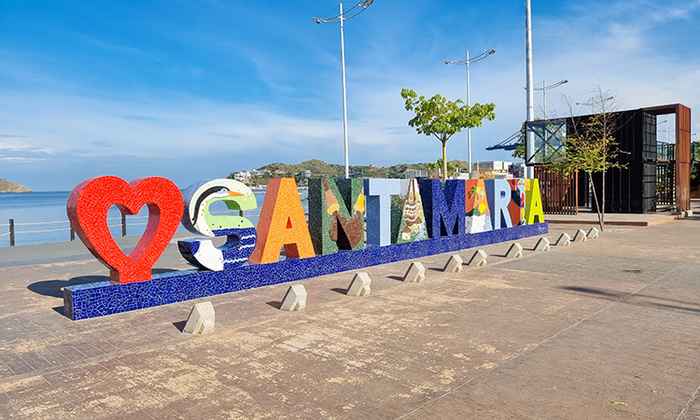
Ahead of the conference, 12 University of Amsterdam climate researchers have published the policy briefing ‘A Fair Fossil Fuel Phase-Out Is Feasible: International Law, Earth-System Justice, and Practical Pathways for a Managed Global Transition.’
André Nollkaemper, Academic Director of SEVEN: “Santa Marta is an urgent opportunity. For the first time, a coalition of willing states is meeting specifically to move from principle to implementation on fossil fuel transition. We want this briefing to help guide that process — to give negotiators and policymakers the integrated framework they need to turn legal obligation, justice imperatives, and practical feasibility into concrete action.”
Bringing together three conversations
Margaretha Wewerinke-Singh, lead-author of the SEVEN briefing: “In our policy briefing we bring three conversations together that are often kept apart. International law provides the legal backbone; Earth-system justice helps determine what fairness requires under planetary limits; and the economic and technological evidence shows that a managed transition can deliver major co-benefits, including cleaner air, greater energy security, fiscal resilience, decent jobs, and lower risks of stranded assets and litigation. The overall analysis shows that a fair fossil fuel phase-out is both legally required and practically achievable.”
Its authors, Margaretha Wewerinke-Singh (lead-author), Kanad Bagchi, Matteo Fermeglia, Joyeeta Gupta, Augusto Heras, Arno Kourula, Johanna Lorenzo, André Nollkaemper, Rick van der Ploeg, Chris Slootweg, Stephanie Triefus, and Ingo Venzke bring together expertise in international law, Earth-system justice, economics, and the natural sciences.
Against the backdrop of the ICJ's Advisory Opinion of 23 July 2025, the authors write: “A fair fossil fuel phase-out is not a distant aspiration. It is a present obligation, an achievable objective, and an opportunity for transformative governance.”
How to prevent stagnation by the major polluters
At Santa Marta, both producer and consumer countries of oil, coal, and gas have been invited to participate. The question arises how the stagnation that has plagued previous COPs can be prevented.
Stefanie Triefus: “Santa Marta should not become a COP in miniature. Its added value is precisely that it is an implementation-focused space for countries and stakeholders that already recognize the need for a just, orderly and equitable transition away from fossil fuels. Producer and consumer countries both need to be in the room, because a fair phase-out must address supply and demand together.
“But the process should not give blocking power to actors whose main objective is to preserve business as usual. The safeguards are a clear mandate, transparency, science- and law-based benchmarks, and concrete follow-ups: national phase-out plans, ending new fossil fuel expansion, subsidy reform, clean-energy investment, and support for workers, communities and fossil-dependent economies.”
From principle to implementation
According to the authors, the policy briefing was written precisely to help move the discussion from principle to implementation.
Augusto Heras: “It shows that the question is not whether a fair fossil fuel phase-out is necessary, but how it can be sequenced, differentiated and financed. We propose integrated policy packages that address the usual obstacles together: managed decline of production, fiscal and subsidy reform, rapid clean-energy and grid deployment, diversification strategies for fossil-dependent countries and regions, labour and social protection measures, and international finance and cooperation. Plus, importantly, procedural safeguards against undue influence. That is how phase-out can avoid being either blocked by vested interests or imposed unfairly on those with the least responsibility and capacity.”
A transition that sacrifices indigenous lands is not a just transition
At SEVEN Margaretha Wewerinke-Singh is responsible for the Fairness of Climate Solutions theme. This is also key in the Santa Marta conference, where, within the conference, a “people’s summit” will take place, to ensure Indigenous peoples and marginalised groups are heard.
Wewerinke-Singh: “It’s critical that the People’s Summit is not treated as a side-event, but as part of the architecture of the conference outcome. That means the recommendations of Indigenous Peoples, Afro-descendant communities, women, youth, workers, peasants and frontline groups should be transmitted formally to the high-level segment, and representatives chosen by those constituencies should have real speaking and drafting roles at all levels of the conference.
“The final outcome—whatever form it takes—should identify their proposals and show how they were incorporated. For Indigenous Peoples in particular, the outcome must respect self-determination, land and territorial rights, and free, prior and informed consent. A transition that sacrifices Indigenous lands for new extractive frontiers — whether for fossil fuels, critical minerals or poorly governed carbon markets — is not a just transition.”
Hopes for the outcomes
Ingo Venzke: “We hope the outcome endorses concrete workstreams on five issues:
- no new fossil fuel expansion and managed decline of existing production;
- demand-side measures that protect energy access and affordability;
- redirecting fossil fuel subsidies and public finance towards clean energy and social protection;
- diversification and debt-sensitive transition finance for fossil-dependent countries and regions;
- and governance safeguards for workers, Indigenous Peoples and frontline communities.
“Santa Marta should make it easier for the COP30 Presidency’s roadmap — and future COPs — to move from general language to concrete implementation and enhance compliance with relevant international obligations.”
Reasons for SEVEN to publish this policy briefing
André Nollkaemper explains that fossil fuel phase-out is precisely the kind of problem SEVEN was established to address. Nollkaemper: “It has been stalled for too long — not because the answers are unknown, but because the conversation has been fragmented. Lawyers, economists, natural scientists, and justice scholars have each been making parts of the case in isolation. What has been missing is an integrated framework that shows how those pieces fit together and reinforce each other.
“We are firmly convinced that the building blocks for unlocking this gridlock are already there: the law is clear, the economics is compelling, and science is unambiguous. But demonstrating that required bringing those disciplines into genuine dialogue — international law, Earth-system justice, economics, and the natural sciences — rather than simply placing them side by side. That is precisely why SEVEN was created: to produce the kind of transdisciplinary analysis that no single discipline can deliver alone.”