Tackling the effects of climate change on diarrheal diseases (Springs) (2024-2025)
Theme: Climate and health
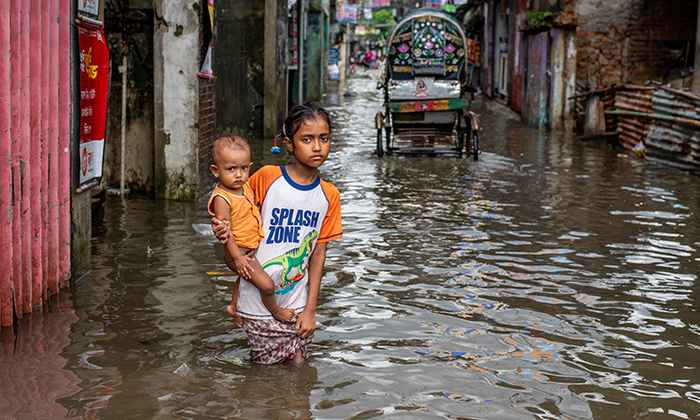
Diarrheal disease is currently the third leading cause of death in children aged 1–59 months. Global climate projections of increased precipitation, flooding, and drought threaten decades of progress in reducing the burden of diarrheal disease.
Through a multidisciplinary approach, SPRINGS is investigating the interplay between shifting weather patterns, environmental changes, and the spread of diarrheal pathogens. By combining pathogen data with climate projections, this project seeks to enhance understanding of the factors influencing diarrheal spread and to predict disease burden under future climate scenarios. Ultimately, we aim to support informed decision-making and the implementation of targeted interventions to reduce the burden of diarrheal diseases in the face of climate change.
The SPRINGS consortium brings together scientists from climate, environmental, health, and social sciences to collaborate with communities, public authorities, and policymakers. This transdisciplinary and cross-sectoral project focuses on mutual learning and capacity building across continents and diverse socioeconomic settings.
The Amsterdam Institute of Global Health and Development and Amsterdam UMC, a leading medical center, are spearheading the consortium.
-
500,000 deaths annually
Climate change and environmental degradation are already affecting human health, particularly through increased rainfall, flooding, and drought. These changes threaten progress in reducing diarrheal diseases, which remain a major cause of death among children under five, accounting for an estimated 500,000 deaths annually. Diarrheal diseases can also lead to long-term health issues such as malnutrition and increased susceptibility to other infections, disproportionately affecting vulnerable populations worldwide, including in the Global South, Asia, and Europe.
-
Envisaged impact
By learning from existing climate extremes and their health impacts, SPRINGS aims to improve preparedness and adaptation strategies for future diarrheal disease threats. To inform and prioritise effective policy responses, SPRINGS is developing four case studies in Italy, Ghana, Romania, and Tanzania, each representing different vulnerability contexts.
-
Researchers & partners
The consortium consists of Amsterdam UMC; the Amsterdam Institute for Global Health and Development; the Norwegian Meteorological Institute; the University of Amsterdam; the University of Ghana; the London School of Hygiene & Tropical Medicine; Three O’Clock; Aarhus University; IHE Delft Institute for Water Education; the Abdus Salam International Centre for Theoretical Physics; Vrije Universiteit Amsterdam; the University of Naples; Haydom Lutheran Hospital; Aquatim; the University of Bucharest; and the Dutch National Institute for Public Health and the Environment (RIVM).
-
Funding
This project has received funding from the European Union under Grant Agreement No. 10113725.
-
Opportunities for collaboration
Reach out to Springs