New Talents in Climate Research: Anne Kervers
“I think the impact and relevance of monetary design for climate finance is significant but overlooked.”
12 January 2026

How important do you consider climate-consistent banking in fighting climate change?
“The alignment of bank portfolios with the Paris Agreement plays a pivotal role in limiting global warming. However, today, most banks’ portfolios are not aligned. Both the scientific literature and, especially, policy are predominantly focusing on disclosing and pricing climate risks to adjust the risk-return profile of climate-(in)consistent investments and steer Paris-aligned credit allocation by private banks.
This is important, but so far it has been insufficient. From historical analysis, I know that money creation has distributive effects, which means that how money creation is organised, e.g., monetary design, shapes how an economy develops. When banks give out loans, they create money. As such, I wondered whether today’s monetary design plays a role in the misalignment of banks.”
In both high school Economics and my Bachelor's in Economics at the UvA, money creation by banks was largely neglected. As such, I had always assumed money was just there…”
The distributive effects of money creation? Please explain.
“In both high school Economics and my Bachelor's in Economics at the UvA, money creation by banks was largely neglected. As such, I had always assumed money was just there, until my colleague Adri Dijkstra at Triodos Bank explained the process of money creation to me. That is why I first started thinking about this about 10 years ago; most people (including bankers) did not know that commercial banks mainly create money, let alone that it has distributive effects.
Klaas Knot (then president of DNB) had to reassure a room full of employees that the theatre show Door de bank genomen by De Verleiders gave a truthful explanation of money creation. There is also a well-known video in which Peter Praet, then the ECB's chief economist, gets confused when he has to explain money creation. There was also a bank director who insisted that his bank had never created a single euro.
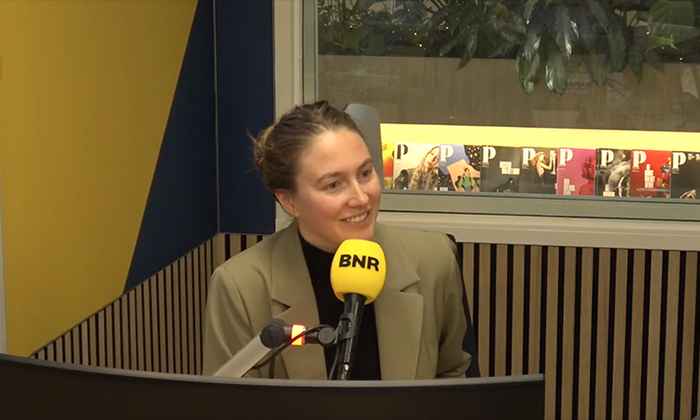
That has largely changed now, though I have noticed during interviews that some bankers still do not know they create money. More and more economists are recognising that money creation is not neutral, but there are still plenty who insist it is, as I saw again recently when I was on a panel.”
What instruments do you use to research this?
“Through interviews and document analysis, I compared the configuration of key elements of monetary design for three different types of banks (commercial, ethical, and development) and examined whether the different configurations could explain the variety in Paris-alignment across the three types of banks.”
The profitability goals of banks have so far been overlooked in the literature and policy discussion, while there appears to be a conflict between public listing and Paris alignment.
What are some of your first conclusions?
“I found that the configuration of equity is very important for climate alignment of the portfolio. Most banks raise equity through public listings. They need to meet double-digit targets and therefore face strong incentives to continue financing fossil fuels, and even need to finance them to compensate for the lower profitability of renewable energy.
The profitability goals of banks have so far been overlooked in the literature and policy discussion, while there appears to be a conflict between public listing and Paris alignment. Globally, six banks manage to reconcile that; they all have a formal purpose embedded in the credit procedure and mission-aligned shareholders.
Implementing those two more broadly could increase Paris alignment among commercial listed banks. These interventions can be justified from a political conception of money creation, namely, a combination of the distributive effects of money creation and the public-private partnerships that condition money creation by private banks.”
Why these particular research questions?
“I think the impact and relevance of monetary design for climate finance is significant but overlooked. This literature gap constrains our ability to limit global heating and also impedes democratic deliberation on different approaches to achieve climate-consistent finance. I hope to show that the available set of policy instruments is much broader than currently considered.”
As a young woman in financial research, which is dominated by men, it takes extra effort to convey your insights.
In what stage of your PhD are you now?
“I’m writing the final paper on broadening the set of policy measures based on the analyses of papers one, two, and three. This final stage is the most interesting, because everything comes together. I’m really happy with the trajectory of my project. It’s nice to see how meaningful insights come together. The main obstacle in this whole process is being tired from long days, so it is important to remind myself to take small breaks during the day and stop working on time.”
What obstacles are you encountering?
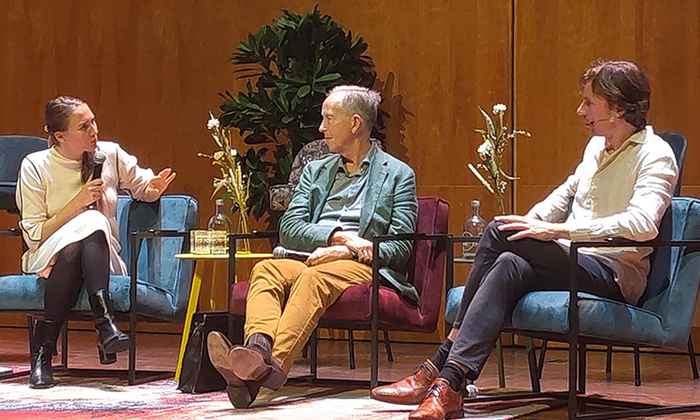
“As a young woman in financial research, which is dominated by men, it takes extra effort to convey your insights. For example, I was recently asked a question during a panel discussion, which the moderator answered himself. I don't always feel like addressing that kind of behaviour, so I let it go. Then, during the break, a man came up to me and said I should have intervened. I told him he should have gone to the moderator, not to me.”
What character traits are you most proud of?
“Being resilient. A strong commitment to my research questions helps me to maintain productivity during tough times, while also monitoring my health. One important aspect is knowing how to prioritise. So, when things are stressful, knowing what is most important to focus on and how to support myself in delivering that.”
What would you still like to learn in the coming years?
“I’d like to learn how to transform my systemic insights into small and practical steps to work on systems change.”
Who is your greatest hero in science, and why?
“Jakob Feinig’s historical book on the influence of monetary design on socio-economic relations in the US helped me to stay committed to my intuition that monetary design is relevant for climate finance. My supervisor, and SEVEN co-founder, John Grin, has also been vital for that commitment.
Testing the relevance of the historical theory of monetary design through empirical research on the contemporary banking system came with significant insecurity and fear of failure. In addition to the required analytical skills, John taught me to ask questions calmly, helping me think through my worries and identify their added value. This improved both my research and helped me to build confidence, for which I am very grateful.”
Where are you heading after completing your PhD?
“I am currently reflecting on the kind of role I want to pursue next. My goal is to apply my insights to concrete climate transitions – for example, greening the banking sector or addressing financial barriers to the energy transition. This type of work can be pursued across a range of institutions, e.g. postdoc positions, (local) government, NGOs, the central or private banks, each with its own advantages and limitations. Time will tell!”