Collaborating for Circular Healthcare: Efficient Use and Upcycling of Lamination Pouches in Dental Care (CirCoLa) (2026-2028)
Theme: Climate and health
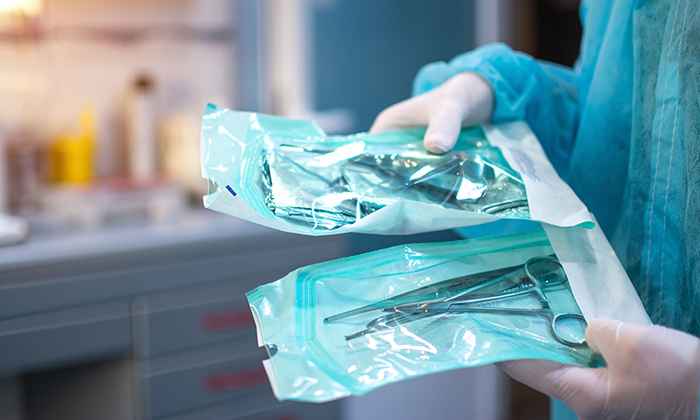
Healthcare improves public health, but it also generates significant environmental harm. In the context of the climate crisis, reducing the ecological footprint of healthcare has become both a societal and legal imperative, reflected in policies such as the Dutch Climate Act and the Green Deal Sustainable Healthcare.
In dental practices, large volumes of high-quality plastic and paper sterilisation pouches are used once and then incinerated, despite their material value and technical potential for reuse or upcycling. This linear use pattern leads to unnecessary waste, resource depletion, and emissions, while sustainable alternatives remain underdeveloped and underutilised in practice.
Technically feasible upcycling process
CirCoLa addresses this challenge through a combined technical, behavioural, and organisational approach. The project develops and validates a technically feasible upcycling process for used lamination pouches, transforming them into new, high-value products.
This project is a collaboration between Hogeschool Utrecht (HU), ACTA (UvA/VU, GreenCycl Fieldlab, Circlefied BV, TopMondzorg, and KNMT (Royal Dutch Dental Association).
-
Co-creation with dental professionals
CirCoLa not only develops and validates a technically feasible upcycling process, but it also investigates how sterilisation materials are currently used, collected, and discarded in dental practices, identifying systemic barriers such as hygiene protocols, procurement routines, risk perceptions, workflow constraints, and regulatory interpretations that lock in single-use practices.
Through co-creation with dental professionals, the project designs and tests refuse-, reduce-, and upcycling strategies in six to eight pilot practices. The result is an implementable step-by-step roadmap that enables circular practices in dentistry without compromising patient safety or care quality.
-
Envisaged impact
CirCoLa contributes to climate mitigation by reducing material use, waste incineration, and the associated greenhouse gas emissions within healthcare. More fundamentally, it addresses structural drivers of unsustainable healthcare practices by challenging linear material systems in an essential public service. By focusing on practical implementation and institutional change rather than individual behaviour alone, the project supports a fair climate transition in which environmental responsibility is integrated into care delivery without shifting risks or costs to patients or practitioners.
CirCoLa generates new knowledge on circular practices in dental care by combining insights from behavioural and material sciences. The project advances understanding of how healthcare professionals adopt sustainable practices, while technically validating an upcycling process for complex medical plastics. Ultimately, CirCoLa contributes to reduced material waste, lower environmental impact, and the transition towards a more circular and sustainable healthcare system.
-
Researchers & partners
This project is a cooperation between Hogeschool Utrecht (HU) – applied research, behavioural and organisational analysis, ACTA (UvA/VU) – dental research and clinical expertise, GreenCycl Fieldlab – validation and development of circular material applications, Circlefied BV – technical processing and upcycling innovation, TopMondzorg – pilot dental practices and implementation environment, and KNMT (Royal Dutch Dental Association) – advisory role and dissemination support.
At SEVEN, the project is led by Catherine Volgenant (Dentistry).
-
Funding
Innovation Booster 2025 – TKI-LSH / Health~Holland (ORANGEHealth-PPS programme).
-
Opportunities for collaboration
Do you see an opportunity for yourself or your organisation to collaborate on this theme? Please contact Denise Li.