Funding for SEVEN research project Urban Climate–Health Nexus
A joint initiative with the University of São Paulo and other Brazilian partners
18 December 2025
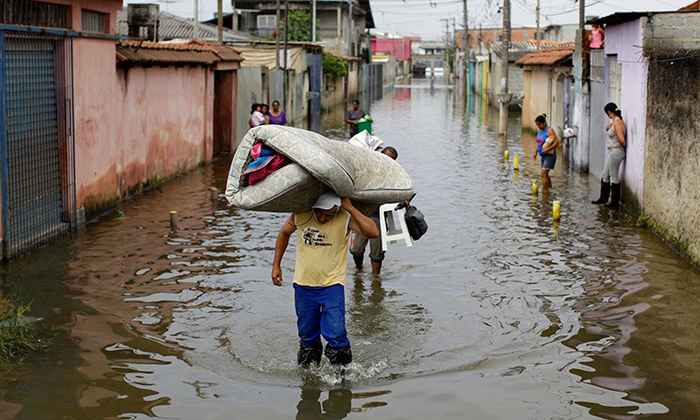
This SEVEN project was selected under the Merian Fund call “Extreme Heat and Water Events: Mitigating the Adverse Health Effects of Climate Change in Cities”, a joint initiative of the Netherlands Organisation for Scientific Research (NWO) and the São Paulo Research Foundation (FAPESP).
Within this highly competitive call, five projects were funded that offer innovative and practice-oriented approaches to addressing the health impacts of climate change in urban environments.
Urban Climate–Health Nexus (UCH-Nexus) examines how intensifying extreme weather events disproportionately affect marginalized populations, amplifying existing health inequalities in cities. The project addresses this complex polycrisis—where climate change, physical and mental health, and urban governance intersect—through a systems perspective.
In-depth urban case studies, also using citizen science
The project is built around four in-depth urban case studies in the Netherlands and Brazil. In Brazil, research focuses on Jardim Pantanal in São Paulo and Parque das Tribos in Manaus – communities highly exposed to recurrent flooding, extreme heat, and socio-economic vulnerability, where climate impacts intersect with informal urbanisation and limited access to health services.
In the Netherlands, the case studies are Nelson Mandelapark in Amsterdam and the municipality of Ede, where increasing heat stress, water-related risks, and spatial inequalities pose growing challenges within comparatively well-resourced governance contexts.
Across these four urban case studies in the Netherlands and Brazil, researchers, practitioners, and community stakeholders collaboratively model the underlying mechanisms that shape vulnerability and resilience. These models help identify key intervention points where climate adaptation, public health, and urban planning can be aligned. Data collection combines scientific sources with citizen science, ensuring that local knowledge and lived experience are embedded in the analysis.
The value SEVEN adds to this project
SEVEN adds value to this project through its systems and complexity approach to climate change. The project is designed as a transdisciplinary process in which researchers, policymakers, health professionals, and community actors jointly analyse how climate extremes, health outcomes, and urban systems interact. Participants will engage in group model building, enabling participants to co-create causal models that reveal feedback loops, trade-offs, and leverage points for intervention.
On the SEVEN side, the project will be led by Renout Wiers, with involvement of Claudi Bockting, Adam Finnemann, Vanessa Harris, André Nollkaemper. Drielli Peyerl and Jannes Willems