Accelerating the Protein Transition
SEVEN’s first annual Forum
16 December 2025
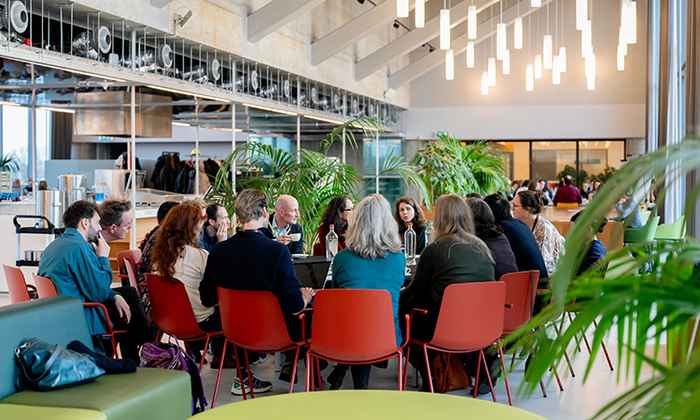
The Forum aimed to identify systemic barriers hindering the protein transition and to find ways to overcome them. SEVEN’s Academic Director, André Nollkaemper, pointed out that the over 130 UvA researchers affiliated with SEVEN represent a wide variety of disciplines, and that addressing the challenges the global food system poses for the climate requires integrating their disciplinary knowledge and working with societal partners, thereby combining academic and practical knowledge.
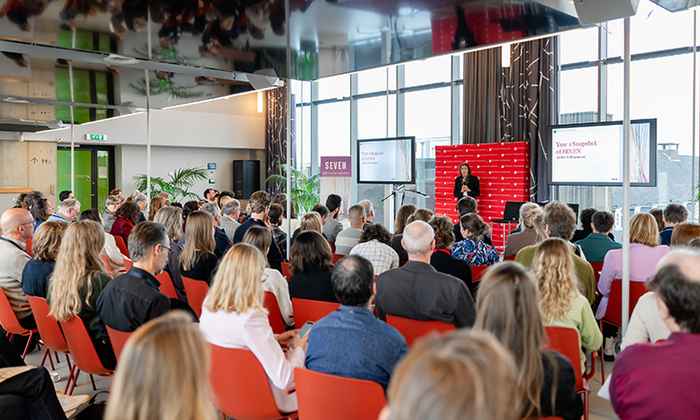
Results from the living lab SAIL
Jan Willem Bolderdijk, Professor of Sustainability and Marketing, presented initial findings from a compelling example of this approach, transforming Amsterdam's nautical event SAIL into a living lab. The central research question was how to increase the number of festival visitors open to choose plant-based alternatives.
To understand consumer choices, and identify possible interventions, the underlying system shaping the behaviour of all involved actors was first mapped through a number of collaborative sessions with researchers, the SAIL organisation and caterers. Based on this initial mapping, a team of SEVEN researchers in collaboration with researchers from the University of Groningen and Wageningen University & Research conducted on-the-ground studies.
It’s excellent that SEVEN is taking an interdisciplinary approach to the challenge of the protein transition. It is great to see that the University of Amsterdam is so involved with the city of Amsterdam through this SAIL project, and it is very good that the behavioural component played such a central role in this research.Anniek Mauser, Head of Sustainability at VGZ
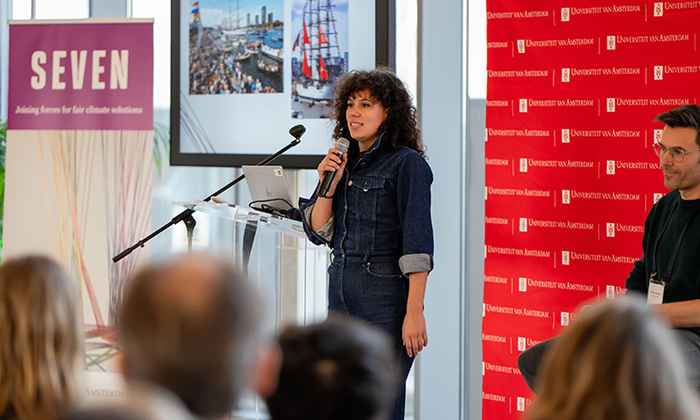
One of these studies examined what happened when it was emphasised to visitors that the special SAIL croquette they tasted had was plant-based. The underlying hypothesis was that experiencing a (very) tasty plant-based croquette would increase openness to future plant-based choices, especially among sceptical consumers. After tasting this snack, all 889 participants were offered a voucher for a €2.50 discount on a plant-based burger.
The results show that among male consumers, emphasising the croquette's plant-based nature almost doubled their willingness to accept the voucher and try the plant-based burger. Female consumers, in contrast, were already more likely to choose the voucher from the start.
Jan Willem Bolderdijk concluded that the current demand for high-impact meals at festivals is self-reinforcing, that a combination of interventions targeting various leverage points can help destabilise the status quo and facilitate transitions, and that SAIL can serve as an example of moving from systems mapping to interventions.
SAIL as a model for intervening
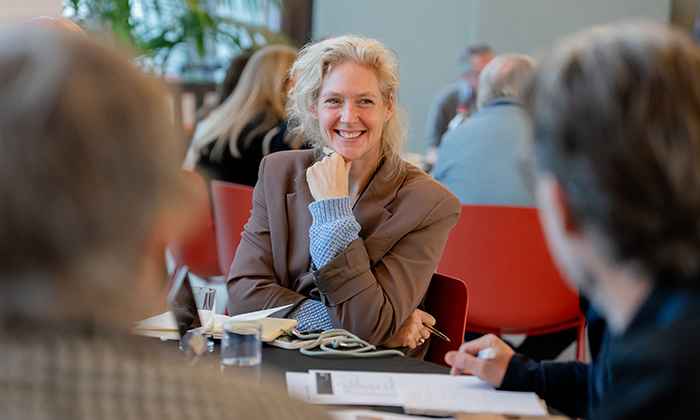
Eline Elbersen, Sustainability Coordinator at SAIL, explained how valuable the cooperation with the caterers had been, since they’re considered a difficult sector to engage with the protein transition, due to their thin financial margins and understandable hesitation to take major risks. Based on positive experience with the SAIL experiment, she had recommended to other festivals SEVEN’s collaborative model of working with partners, e.g. caterers, rather than imposing change and leaving the financial risks on them.
Knowledge gaps and systemic barriers
Participants then moved to eight round tables, each dedicated to a different theme, like True Pricing of Meat, Resistance and Polarisation, and Protein Transition in Healthcare Institutions. The aim was to break the massive protein transition problem into smaller, manageable problems.

In the subsequent plenary, rapporteurs from each table reflected on the systemic barriers they had identified, the promising interventions or enabling conditions they thought were needed to make interventions work, and the knowledge gaps that needed to be addressed. For instance, for the Embedding Animal Welfare table, the latter was how animal welfare should be defined, how it can be meaningfully quantified, and how it can be deployed most effectively in policy and practice.
Overall, the conclusion was that no single transition was needed, but rather a series of transitions, each with its own specific intervention and frame. In some cases, a focus on an articulated alternative was needed, while in others, a silent revolution could achieve more.
Important takeaways and inspiring examples
A shared conclusion emerging from the Forum was that the industry and the consumers are moving towards meals with a smaller climate footprint, but that the government is not really stepping up. Marjolijn Heslinga, Program Lead at the Foundation Transitiecoalitie Voedsel, noted that the Netherlands should follow Denmark's approach, where the Ministry of Food, Agriculture and Fisheries drew up an Action Plan for Plant-Based Foods and ensured that all relevant parties supported it.
Our recent research shows that 63% of Dutch consumers now support a 'fairness levy' on meat of 1 euro per kilo, as long as that money goes to the farmers. At the beginning of next year, TAPP wants to launch a Dutch version of the Danish action plan, with a budget three times larger than the Danish one, as the Netherlands is three times bigger.Jeroom Remmers, director of the True Animal Protein Price Coalition
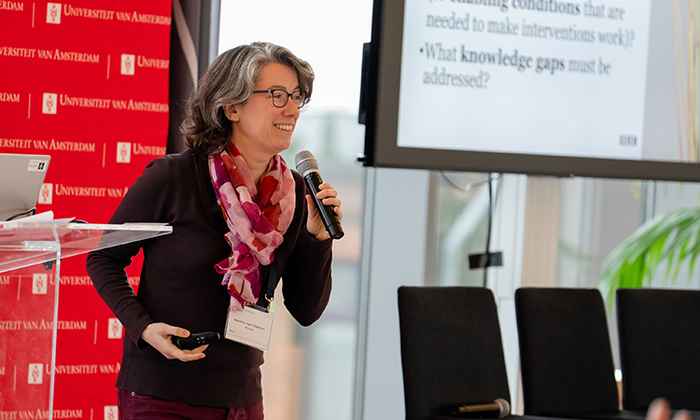
Martine van Haperen, Food Service Expert at nonprofit organisation ProVeg, agreed that many consumers – 65,7% of the Dutch – are saying they want to eat more plant-based, but also that there’s an intention-behaviour gap the size of the Grand Canyon.’ Universities are doing remarkably well, according to her.
We need to press all the buttons at once. Start with consistent government policy, a long-term vision and an integrated approach, and involve potential opponents from the outset. Make it clear that there are costs associated with the protein transition, how high those costs are, and that there will be both winners and losers.Willem Boterman, Associate Professor at the UvA
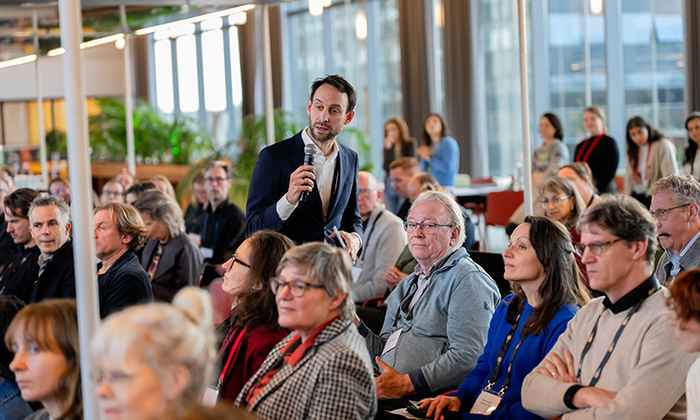
And Anniek Mauser, Head of Sustainability at health insurer VGZ, stressed the importance of linking the protein transition to health outcomes. While emphasising the continued importance of research and scientific evidence, she noted that “where you see the actual change happening is where people just start doing it.” As an example, she mentioned the Noordwest Ziekenhuisgroep, which has made vegetarian meals the default.
Peter van Dam, co-founder of SEVEN and moderator of the event, concluded by saying that it’s easy to make fun of those first vegetarians in the Netherlands a hundred years ago, who didn’t just promote meatless eating, but also urged people to refrain from using spices, salt, pepper and drinking alcohol. He stressed that we need the very people who dare to be different to make big changes happen. He concluded: “There’s a real sense of opportunity; change is within reach. We CAN do this.”