ReTaste LessWaste (2025-2028)
Thema: Climate and Health
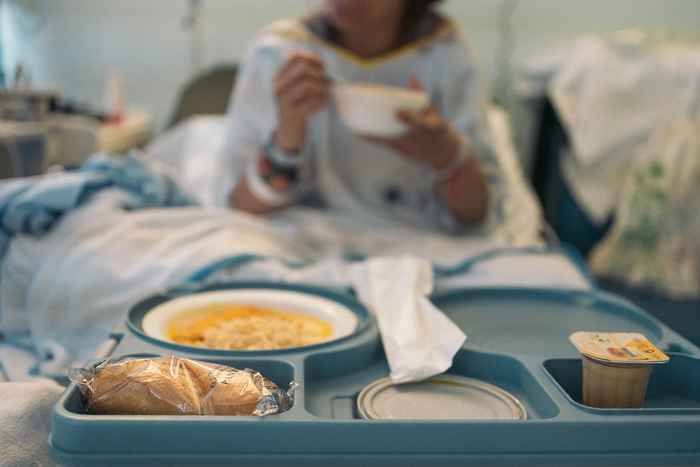
In the two Amsterdam UMC hospitals, a substantial amount of food waste is generated daily, originating from staff (approx. 19,500 employees), patients (approx. 2,000 beds) and (outpatient) visitors (approx. 5,000). Food waste is generated in the kitchens during food preparation (particularly trimmings and prepared food that is not served), in the staff and visitor canteens, and in the dishwashing area, where food waste from patients and staff is returned. These food waste residues are currently partly treated as SWILL (fruit and vegetable waste) and largely (estimated at 70 per cent) disposed of via general waste to the incinerator.
Through this project, the researchers aim to obtain data on eating patterns at an individual level. These patterns will vary between visitors and staff, as well as between patients in different wards (such as geriatrics, surgery, and internal medicine). Although dietary and nutritional requirements vary greatly between these populations, meals currently offered are broadly uniform. For example, an average geriatric patient might eat 100g of the 500g on their plate. However, it remains entirely unknown to date what proportion of the meal—in terms of both food products and nutrients—is actually consumed. Targeted data on consumption patterns will enable meals to be tailored to the patient’s specific needs. The meal for the geriatric patient can thus be formulated based on the expected 100g consumption and optimised to meet the nutritional requirements of an older person and their specific preferences.
In addition to enabling a significant reduction in animal-based products based on the actual eating patterns of patients, visitors and staff, this project offers an excellent opportunity to experiment with alternative protein sources within the nutritional pilot studies (featuring bespoke meals tailored to each population group). Researchers will measure consumer satisfaction via the installed smart system. Still, they will also gauge it through qualitative feedback to ensure the transition does not come at the expense of the taste experience. This data-driven approach is desirable to understand the possibilities and limitations of the protein transition. This is important for making the food system more sustainable in a society where the protein transition is associated with a negative stigma.
-
Envisaged impact
The ambition is considerable: to significantly reduce food waste, create a healthier food environment for staff, patients and visitors, support the protein transition, and convert avoidable and unavoidable food waste into sustainable energy. By reducing food waste and improving waste processing, this project helps to minimise the environmental impact of food in hospitals. We can quantify these environmental benefits using a Life Cycle Assessment (LCA), a method for calculating environmental indicators such as CO₂ emissions, land use, and water consumption.
The minimum estimated total savings over the first five years amount to €160,000 in year 1, €300,000 in year 2, €400,000 in year 3, €450,000 in year 4 and €500,000 in year 5. This totals €1.8 million. In addition, the average annual profit from renewable energy is estimated at €100,000, for a total of €2.3 million over five years.
-
Reseachers and partners
ReTaste LessWaste is a collaboration between Amsterdam UMC and CREM Waste Management. With two project leaders, an LCA researcher and various working groups, Amsterdam UMC focuses primarily on reducing food waste, the protein transition and creating a healthier food environment. CREM Waste Management focuses primarily on developing the necessary infrastructure at Amsterdam UMC, high-quality food-waste processing, and formulating overarching food strategies and broader implementation options.
-
Funding
EFRO (Europees Fonds voor Regionale Ontwikkeling) through Kansen voor West III.
-
Opportunities for collaboration
Do you see an opportunity for yourself or your organisation to collaborate on this theme? Please contact Denise Li.