Co-creation and Integration of Planetary Health Impact Assessment in policy practice (CINPHIA) (2026-2031)
SEVEN theme: Climate and Health
How do you create policies that benefit both people and the planet?
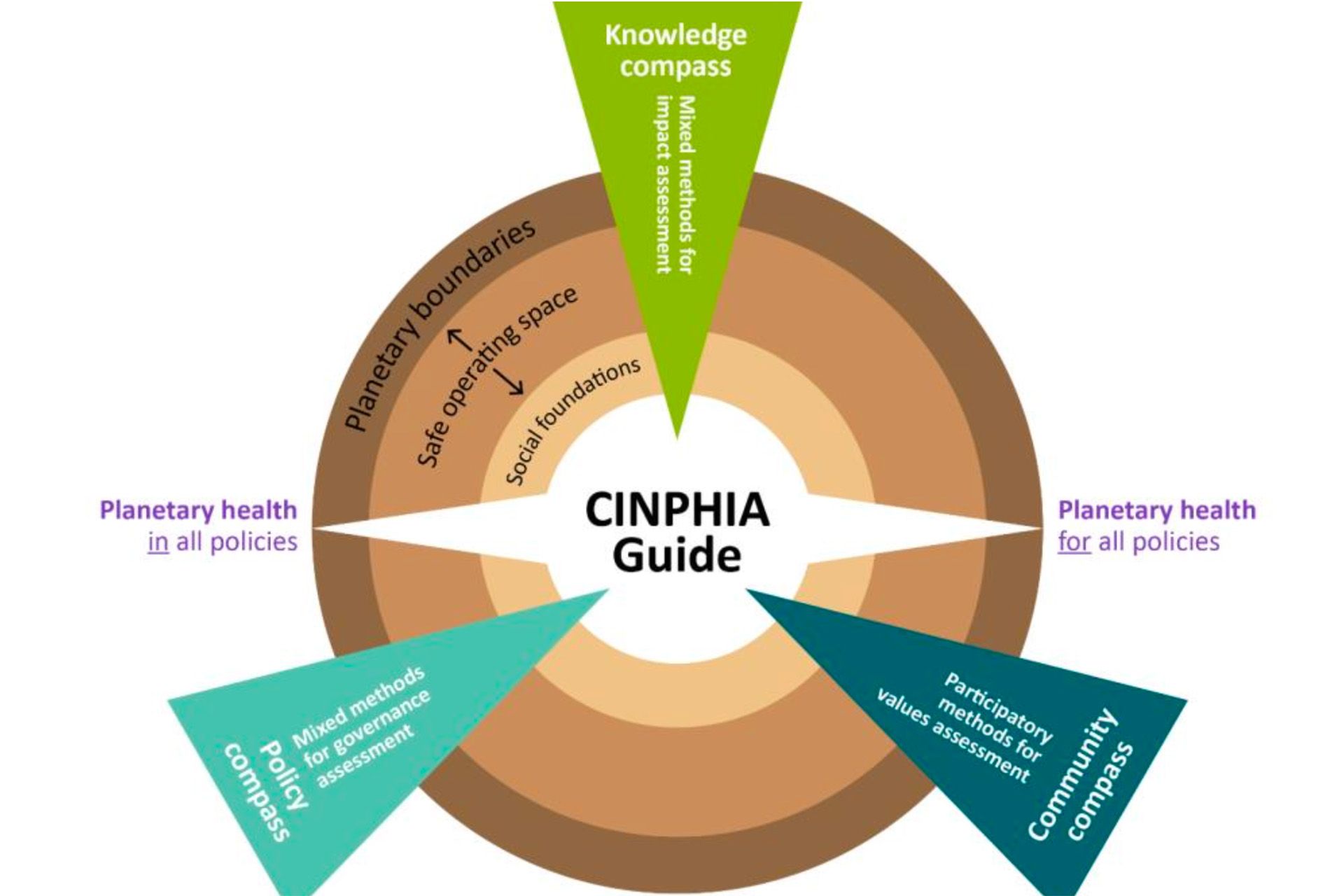
With an NWO/NWA grant, Co-creation and Integration of Planetary Health Impact Assessment in policy practice (CINPHIA) will spend the next five years developing a Planetary Health Impact Assessment Guide to support policymaking in the protection and restoration of planetary life support systems and the health of people and the environment.
The health of people and that of the planet are inextricably linked. Both are under pressure due to, among other things, climate change, environmental pollution, and biodiversity loss. Planetary health is about understanding and addressing human disruptions to Earth's natural systems to support the sustainable health of humans and all life on Earth. However, policymakers lack a clear overview of knowledge and evidence to account for planetary health impacts in policy practice. Citizens and other groups assign different meanings to these concepts, and responsibilities are scattered across various ministries, sectors, and levels of government. It is still not well understood how we can facilitate collaborative and integrated policymaking.
The goals of CINPHIA are therefore to:
- clarify the concepts of planetary health and integrated policymaking;
- develop an instrument, the so-called ‘Planetary Health Compass’, to support decision-making;
- gain insight into the distribution of effects across different regions.
CINPHIA is a transdisciplinary project that brings together a collective of diverse knowledge institutions and disciplines, relevant ministries, provinces and municipalities, implementing organizations, and citizens; thereby directly aligning with the needs, capacity, rules, and conditions of these stakeholders. An early version of the Planetary Impact Assessment Guide will be tested in two distinct case studies on (1) the impacts of climate policy on potential effects on infectious diseases, and (2) the impacts of sustainable pharmaceuticals policy on the environment.